Product introduction
Olymprix Tablet is an antidiabetic medicine used to manage type 2 diabetes mellitus. It helps control blood sugar levels when diet and exercise alone are not sufficient, thereby reducing the risk of serious diabetes-related complications such as kidney damage, nerve problems, and vision loss.
It can be taken with or without food, preferably at the same time each day. Take it exactly as prescribed by your doctor and do not stop using it without medical advice. Regular exercise, a balanced diet, and monitoring of blood sugar levels are essential for best results.
Uses of Olymprix Tablet
-
Treatment of Type 2 Diabetes Mellitus
Benefits of Olymprix Tablet
Olymprix Tablet helps improve insulin secretion and reduces hormones that raise blood sugar levels, keeping glucose under control. Regular use supports stable blood sugar management, helping prevent long-term complications like heart disease, kidney damage, and nerve problems. It also improves overall metabolic health and quality of life when combined with a healthy lifestyle.
Side effects of Olymprix Tablet
Most side effects are mild and resolve as your body adjusts. Contact your doctor if they persist.
Common side effects include:
-
Headache, dizziness
-
Constipation or diarrhea
-
Hypoglycemia (low blood sugar)
-
Increased body temperature
How to use Olymprix Tablet
Take this medicine in the dose and duration prescribed by your doctor. Swallow it whole with water; do not crush or chew it. It may be taken with or without food, but try to take it at the same time each day.
How Olymprix Tablet works
Olymprix Tablet increases insulin secretion from the pancreas and reduces hormones that elevate blood sugar levels. This dual action helps lower both fasting and post-meal glucose levels.
Safety advice
-
Alcohol: Unsafe – may cause severe low blood sugar.
-
Pregnancy: Consult your doctor – limited human data; may be unsafe.
-
Breastfeeding: Consult your doctor – may pass into breast milk.
-
Driving: Caution – low or high blood sugar can impair alertness.
-
Kidney: Safe if prescribed; no dose adjustment needed.
-
Liver: Safe if prescribed; no dose adjustment needed, but avoid in severe liver disease.
Would you like me to create a short mobile-friendly version (like what appears on Tata 1mg’s first screen — just 4–5 crisp lines per section)?
You said:
ChatGPT said:
Here is a refined product-listing style summary for Onetrela 100 mg Tablet (4’s pack) — please note that some details are incomplete and you should verify with the manufacturer or prescribing information before use:
Product Introduction
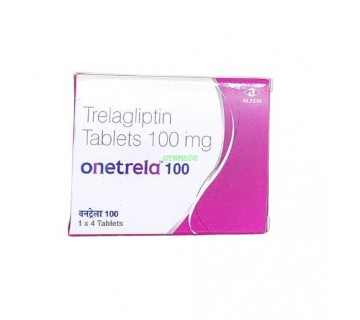
Onetrela 100 mg Tablet is a prescription medicine marketed in a pack of 4 tablets (“4’s”). It is manufactured by Alkem Laboratories Ltd..
(However: The active ingredient and full indications are not clearly listed in the sources available.)
Uses
– Intended for use under physician prescription.
– Specific uses (disease/condition) are not clearly specified in the sources found.
Benefits
Because the indication is unclear, the benefits cannot be precisely described. The listing implies it is a therapeutic agent where the tablet strength is 100 mg; you would need to refer to the approved prescribing information for the exact therapeutic benefit.
Side Effects
Specific side-effects are not fully listed in the publicly available sources for this product. As a prescription tablet, standard precaution: consult a doctor and monitor for unwanted reactions.
How to Use
– Use strictly as prescribed by your doctor.
– Pack size: 4 tablets per
– Storage & handling: Keep out of reach of children; follow manufacturer instructions (not fully specified in available info).
Safety Advice
– Since full composition/indication is not clearly provided, the usual precautions apply: use only under medical supervision, notify your doctor of other medicines you’re using, kidney/liver conditions, pregnancy/breastfeeding status.
– Because the composition is unclear, do not self-medicate.
If you like, I can check further to find the active drug(s), exact indication, dosage, contraindications of Onetrela 100 mg from official regulatory documents or drug databases and provide a full technical sheet. Would you like me to do that?
You said:
ChatGPT said:
Certainly, here’s a revised concise product summary for Onetrela 100 mg Tablet (pack of 4) without the extraneous line
Product Introduction
Onetrela 100 mg Tablet is a prescription medicine marketed in a pack of 4 tablets.
Uses
– Intended for use under physician supervision.
Benefits
The specific therapeutic benefit depends on the underlying condition for which it is prescribed; use as directed by your doctor.
Side Effects
Specific side-effects are not fully listed in publicly available sources for this product. Consult your doctor if you experience any adverse reactions.
How to Use
– Use strictly as prescribed by your doctor.
– Pack size: 4 tablets.
Safety Advice
– Use only under medical supervision.
– Inform your doctor of other medicines, pregnancy/breastfeeding status, or existing kidney/liver conditions.
If you’d like, I can look up the full technical sheet (active ingredient, detailed indications, dosage, contraindications) for Onetrela 100 mg and share it.
You said:
ChatGPT said:
Here’s a detailed, long-form product summary for Onetrela 100 mg Tablet (4’s pack) — you may need to verify certain details (active ingredient, indication) with official prescribing information or a pharmacist.
Product name
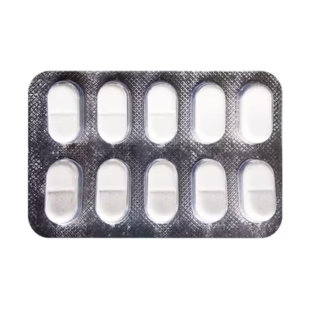
Onetrela 100 mg Tablet — available as a strip of 4 tablets.
Introduction
Onetrela 100 mg Tablet is a prescription-only medicine marketed by Alkem Laboratories Ltd. (India) under the brand name “Onetrela.” According to available listings, this product is offered in strips of 4 tablets.
The available information implies that this medicine contains the active ingredient Trelagliptin 100 mg (or is intended to represent that molecule) which is used for the management of type 2 diabetes mellitus.
However: some online listings (for example, TNMeds) mark the composition as “unknown” or “-” for Onetrela 100.
Therefore, while the brand name and packaging are clear, the definitive publicly-available detailed composition and full prescribing information may not be fully disclosed in publicly accessible sources. Accordingly, this summary presents best-available information for educational/reference use only.
Uses / Indication
Based on the likely active ingredient and the marketing data, Onetrela 100 mg appears to be used for:
-
Adjunctive treatment of adult patients with type 2 diabetes mellitus, to improve glycaemic control when diet and exercise alone do not provide adequate control.
-
It may be given alone (monotherapy) or in combination with other antidiabetic medications (such as metformin, sulfonylureas) as per physician guidance.
This inference is drawn from the documentation on trelagliptin, which is indicated for type 2 diabetes.
Because the publicly displayed product listing (TNMeds) states “contains – Unknown” for Onetrela, it is strongly recommended to verify the actual active ingredient in your local dispensary
Benefi
When used under physician supervision, Onetrela 100 mg offers the following potential benefits (assuming it is indeed trelagliptin):
-
Improvement of fasting and post-meal blood glucose levels through its mechanism (as a DPP-4 inhibitor) which increases incretin hormone activity, thereby enhancing insulin secretion and reducing glucagon secretion
-
In combination with lifestyle measures (diet, exercise, weight management), it can help reduce the long-term risk of complications associated with persistent hyperglycaemia (such as diabetic kidney disease, retinopathy, neuropathy, cardiovascular disease).
-
Possible once-weekly dosing (in the case of trelagliptin) may improve convenience and adherence compared to daily antidiabetic medications.
Again, the exact dosing schedule for Onetrela in India should be confirmed from the prescribing label.
How Onetrela 100 mg works
Assuming the active drug is trelagliptin:
-
Trelagliptin is a dipeptidyl peptidase-4 (DPP-4) inhibitor. DPP-4 is an enzyme responsible for breaking down incretin hormones (such as GLP-1 and GIP). These hormones enhance insulin secretion and suppress glucagon release when blood glucose levels are elevated. By inhibiting DPP-4, trelagliptin increases endogenous incretin levels, thereby stimulating glucose‐dependent insulin release and lowering hepatic glucose output.
-
The long half-life of trelagliptin allows for less frequent administration (once-weekly in clinical trials) which may help patient compliance.
-
Through these mechanisms, the medicine helps reduce both fasting and post-prandial blood glucose levels and contributes to overall glycaemic control.
Dosage & Administration
-
Onetrela 100 mg is provided in strips of 4 tablets (as listed in India).
-
The exact dose, frequency, and duration should be prescribed by your physician based on your condition, other medicines you’re taking, kidney/liver status, and how you respond to therapy.
-
If indeed trelagliptin, the usual adult dose in clinical studies was 100 mg once weekly (in Japan) in combination with diet and exercise.
-
It may be taken with or without food, but you should take it at approximately the same time each scheduled dose to maintain consistent levels.
-
Do not change your dose or stop taking the medicine without consulting your doctor, even if you feel well, because uncontrolled diabetes can lead to complications.
Side-Effects
Like all medicines, Onetrela 100 mg may cause side-effects. Most are mild and tend to disappear as your body adjusts, but some may require medical attention. Typical side-effects reported for trelagliptin include:
-
Headache, nasopharyngitis (upper respiratory tract infection)
-
Gastrointestinal discomfort
-
Hypoglycaemia (especially when used with insulin or sulfonylureas) — although monotherapy risk is low.
-
Rare but serious: pancreatitis, allergic skin reactions — monitor and report any skin rash/swelling, persistent stomach pain.
Because the precise active ingredient for Onetrela in your country may vary (or the public listing is incomplete), always check the leaflet/consult your doctor or pharmacist for the full list of side-effects.
Contraindications & Safety Advice
-
Do not take Onetrela if you are allergic to the active ingredient (or any excipient in the tablet).
-
Pregnancy & Breast-feeding: The safety in pregnancy or breastfeeding may be limited; you must consult your doctor if you are pregnant, planning pregnancy, or breastfeeding.
-
Driving and operating machines: If you experience dizziness or low blood sugar, avoid driving until you feel alert.
-
Alcohol: May enhance risk of hypoglycaemia; limit or avoid alcohol while on therapy.
-
Kidney / Liver impairment: Use with caution; your doctor may monitor renal and hepatic function and adjust therapy as needed. Even though trelagliptin was used without dose adjustment in mild/moderate impairment in trials, severe impairment should be assessed carefully.
-
Regular monitoring of blood glucose, kidney & liver function, and possibly HbA1c is recommended to assess therapy effectiveness and safety.
Precautions & Lifestyle Advice
-
Onetrela is not a substitute for lifestyle measures: a healthy diet (low in refined sugar and saturated fats), regular physical activity, weight management, avoiding smoking and excessive alcohol are crucial for long-term diabetes control.
-
Follow your physician’s instructions regarding diet, exercise and self-monitoring of blood glucose.
-
Inform your doctor of all other medications you are taking (prescribed or over-the-counter), as drug interactions may occur.
-
Do not stop treatment prematurely even if you feel well — uncontrolled blood glucose can silently damage organs (kidneys, nerves, eyes, heart).
Storage & Additional Information
-
Store the medicine in the original packaging, in a cool, dry place away from direct sunlight and moisture, and out of reach of children.
-
Do not use the medicine after the expiry date printed on the pack.
-
Dispose of unused or expired tablets safely, according to local regulations.
-
Only use this medicine with a valid prescription.
Important Note
Because publicly accessible sources for Onetrela 100 mg Tablet list the composition as “unknown” and do not provide full prescribing information for the Indian formulation, you must verify the actual active ingredient, approved indication, dose schedule, contraindications and safety in your own region. The information above—while aligned with the likely active drug (trelagliptin 100 mg)—may not exactly match the specific product variant you have. Always rely on your doctor or pharmacist’s information and the printed leaflet.


Reviews
There are no reviews yet.